How to promote your music on TikTok in 2027
A simple guide to getting your song on TikTok, getting people to use it, and turning views into streams.
On this page
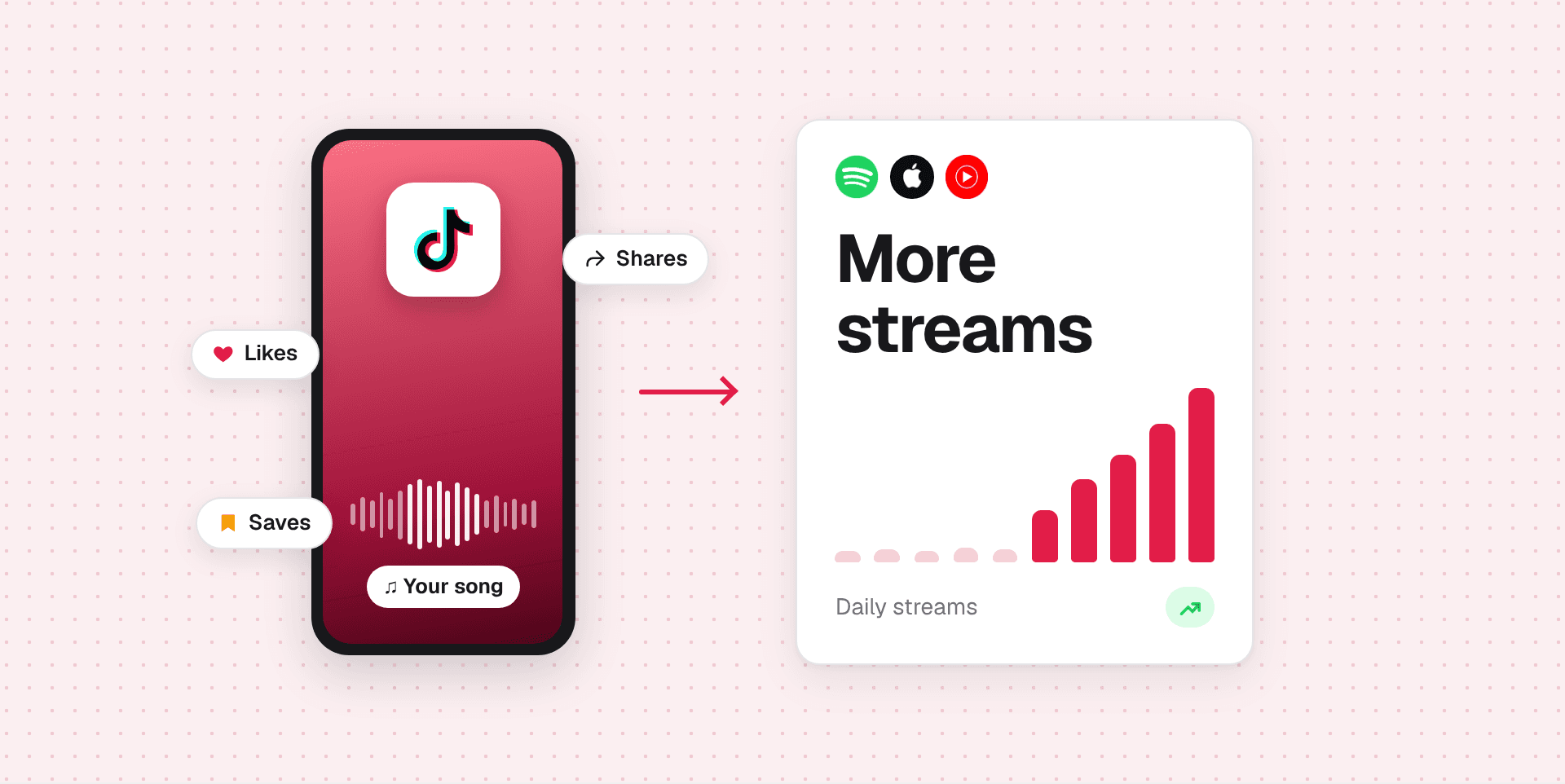
Promoting music on TikTok boils down to one thing: getting other people to use your song in their videos.
Each time a video uses your music, it's like a mini ad for it, and each one has the potential to send new listeners to your Spotify, Apple Music, or YouTube.
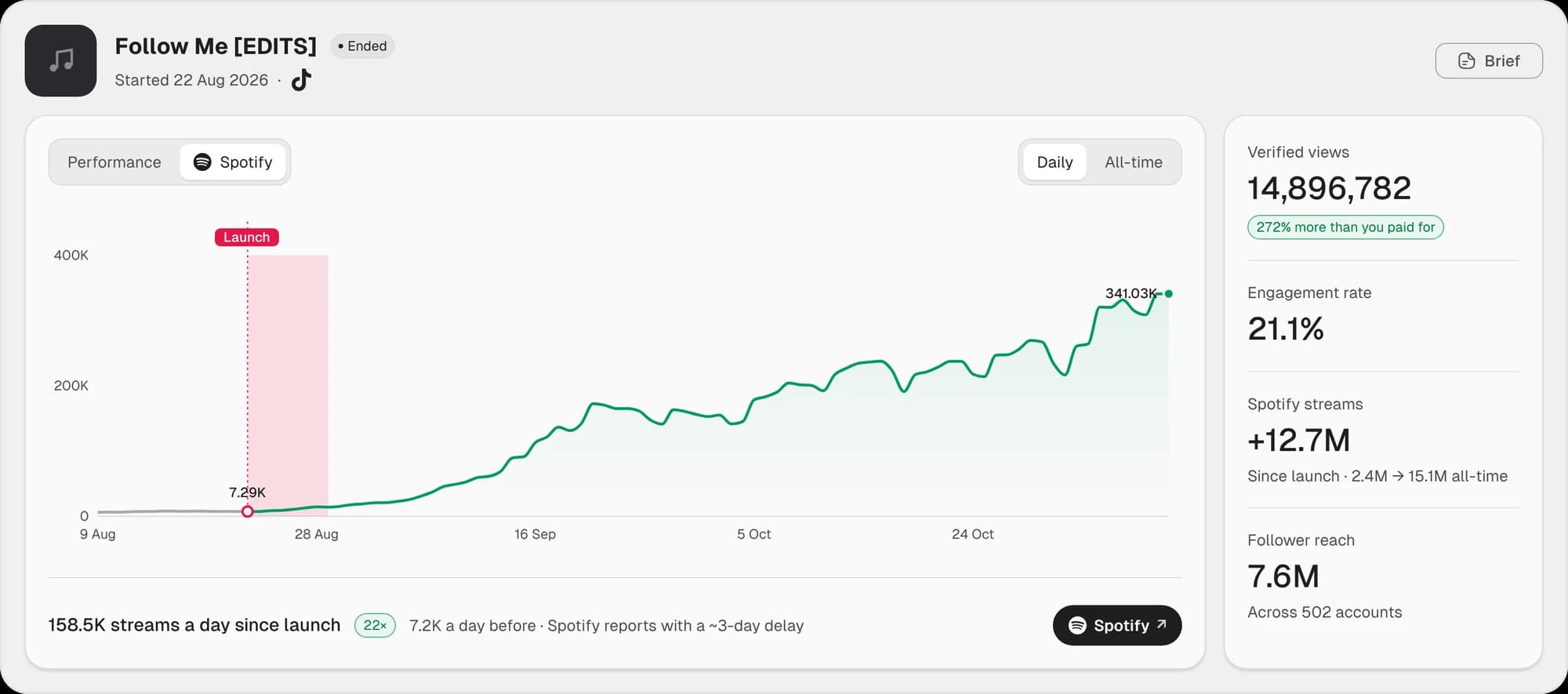
In this TikTok music promotion guide, we’ll walk through the basics of how to get your music on TikTok, how to post content that actually spreads, and how to get creators to use your music at scale. We'll also cover real campaign data, including how a song from back in 2013 grew from about 7,000 to 340,000+ daily Spotify streams.
Why TikTok matters for your music
TikTok is now one of the main places people find new songs. In TikTok’s latest Music Impact Report with data company Luminate, they reported that:
- 84% of songs that entered the Billboard Global 200 in 2024 went viral on TikTok first.
- TikTok views were significantly linked to streaming numbers for 96% of the artists analysed.
- Artists with streams closely linked to their TikTok activity grew streams 11% a week on average, compared with 3% for other artists.

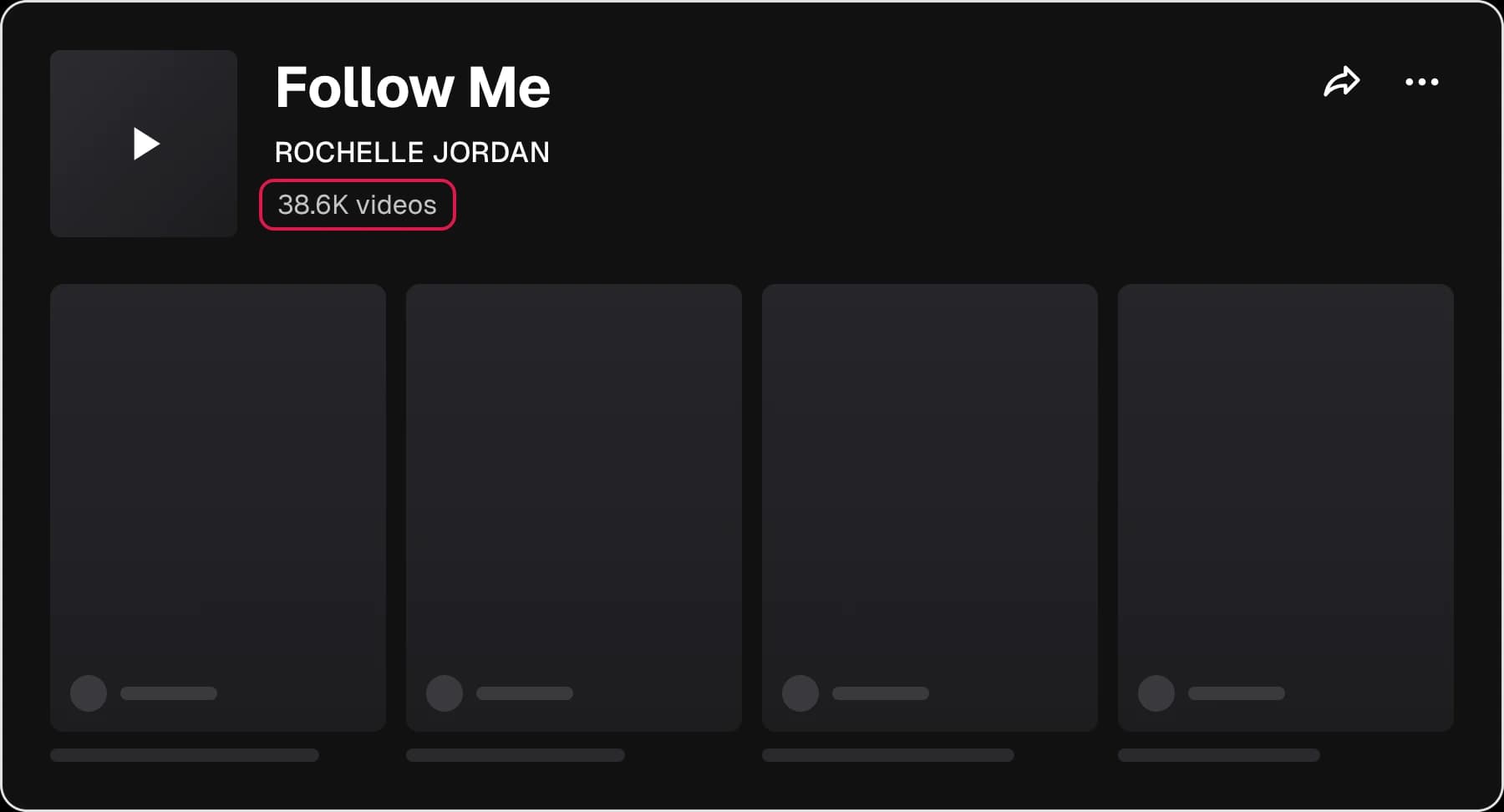
It isn't only new releases. Older songs can get a second life too, like Rochelle Jordan’s ‘Follow Me’ from 2013, which you’ll see later in this guide.
People reuse sounds on Instagram Reels and YouTube Shorts all the time, but TikTok is the best connected to streaming apps. Viewers can save a song to Spotify or Apple Music in one tap, and in Clipster's own campaign data, TikTok is where views turn into streams most often.
1. Get your music on TikTok
First, your song needs to be in TikTok's sound library. Most artists get it there through their distributor. When you release a song, just pick TikTok as one of the platforms, and it goes out along with Spotify and Apple Music.
If you don't have a distributor, TikTok's own SoundOn lets you upload music directly and see how your sounds perform.
Once it's live, a few things help:
- Set up your artist profile. If you can get a TikTok artist account, use it. Your songs will show on your profile and your sound pages will link back to you.
- Check your sound page. Search your song on TikTok and make sure the title, artist name and cover art are right. This page shows how many videos use your sound, so you'll come back to it often.
- Give TikTok a head start if you can. If your distributor allows it, put the song on TikTok a few days before it hits streaming. That gives creators a chance to find it first.
2. Pick the part of the song people will use
TikTok videos usually use a short clip of a song, often 15 to 30 seconds, so the snippet matters more than the full track. Look for the part that is easy to act out, dance to, lip sync or edit to:
- a catchy hook or chorus
- a clear beat drop or switch, which works well for transitions
- a lyric people can relate to or quote
If you're not sure, test two or three snippets. Post videos with each one and see which gets more views, saves and reuses. Then put your effort behind the winner.

The most common mistake is artists picking the part they like most, not the part that's easiest to make a video with. If a creator can't picture a video for it in a few seconds, it's the wrong part.
 Konstantin S.Music Partnerships Lead, Clipster
3. Post your own videos with the song
Start with your own account. You don’t need a big following, you just need to post regularly.
A few ideas that work for artists:
- Behind the scenes: making the beat, writing the hook, the first take in the studio.
- The story behind the song: who it's about or what was happening when you wrote it.
- Performance clips: a live version, an acoustic take, or a snippet in your bedroom.
- Reactions: fans singing it, or friends hearing it for the first time.
Noah Kahan is a good example. He posted a live clip of "Stick Season" months before it came out, then kept sharing behind-the-scenes posts like the ones below. The song went viral on TikTok and later reached number 9 on the Billboard Hot 100.
Hook people fast
Grab attention in the first second or two. Start with the best part of the song, or a line on screen that makes people want to keep watching. Post several times a week while you're promoting a song, and keep testing new ideas rather than repeating one video.
Make your videos easy to find
Many people use TikTok's search bar to look for songs, so put the song title and your artist name in the caption and on screen, and add a few hashtags that fit the video and the genre. A handful of relevant hashtags works better than a long list.
Use TikTok ads to boost your best videos
TikTok ads can push a song further, but there's a catch. TikTok's built-in Promote tool often can't be used on videos with commercially released music, even your own, so artists usually use Spark Ads in TikTok Ads Manager instead. Spark Ads let you boost your own posts, or other creators' posts that use your song with their permission.
Boosts work best on videos that are already doing well, and it's worth checking with your label or distributor first, since music rights can affect what you can boost.
4. Make your song easy to reuse
Views on your own videos are nice, but the real goal is getting other people to make videos with your song.

Give people a clear idea
Songs are easiest to reuse when there's a clear idea behind them, like a transition on the beat drop or a lyric that fits a certain type of clip. People can copy that. They can't copy a vague vibe. And the easier an idea is to copy, the more likely it is to spread. Adding lyrics on screen also helps people remember the song and search for it later.
Join trends and engage
Pick trends that fit your song's mood rather than forcing ones that don't, and engage with videos that use your song. Comment on them, duet or stitch them. People are much more likely to post again when they know you've seen it.
Link the video to your song
TikTok's Add to Music App button lets viewers save a song to Spotify, Apple Music and other music apps in one tap. It works for songs released through a distributor or SoundOn, so release your song properly rather than only posting it as an original sound. Add your streaming links to your bio too.

5. Get creators to use your song
Posting on your own account can only take a song so far. The fastest way to scale a song is to get many creators using it at once. Each creator's audience hears the song in a new setting, and when TikTok sees lots of videos using the same sound, it tends to push it further.
There are three main ways to do this:
| Method | How you pay | How many videos | Main downside |
|---|---|---|---|
| Ask creators directly | Free, or a small favour or fee | A few | Slow, and results vary |
| Pay influencers per post | A set fee per video | One per creator you book | You pay before you know how the video will do |
| Pay-per-view creator campaign | A rate per 1,000 views, up to your budget | Many, from lots of creators at once | Needs a clear brief, and you have less say over each video |
How a pay-per-view creator campaign works
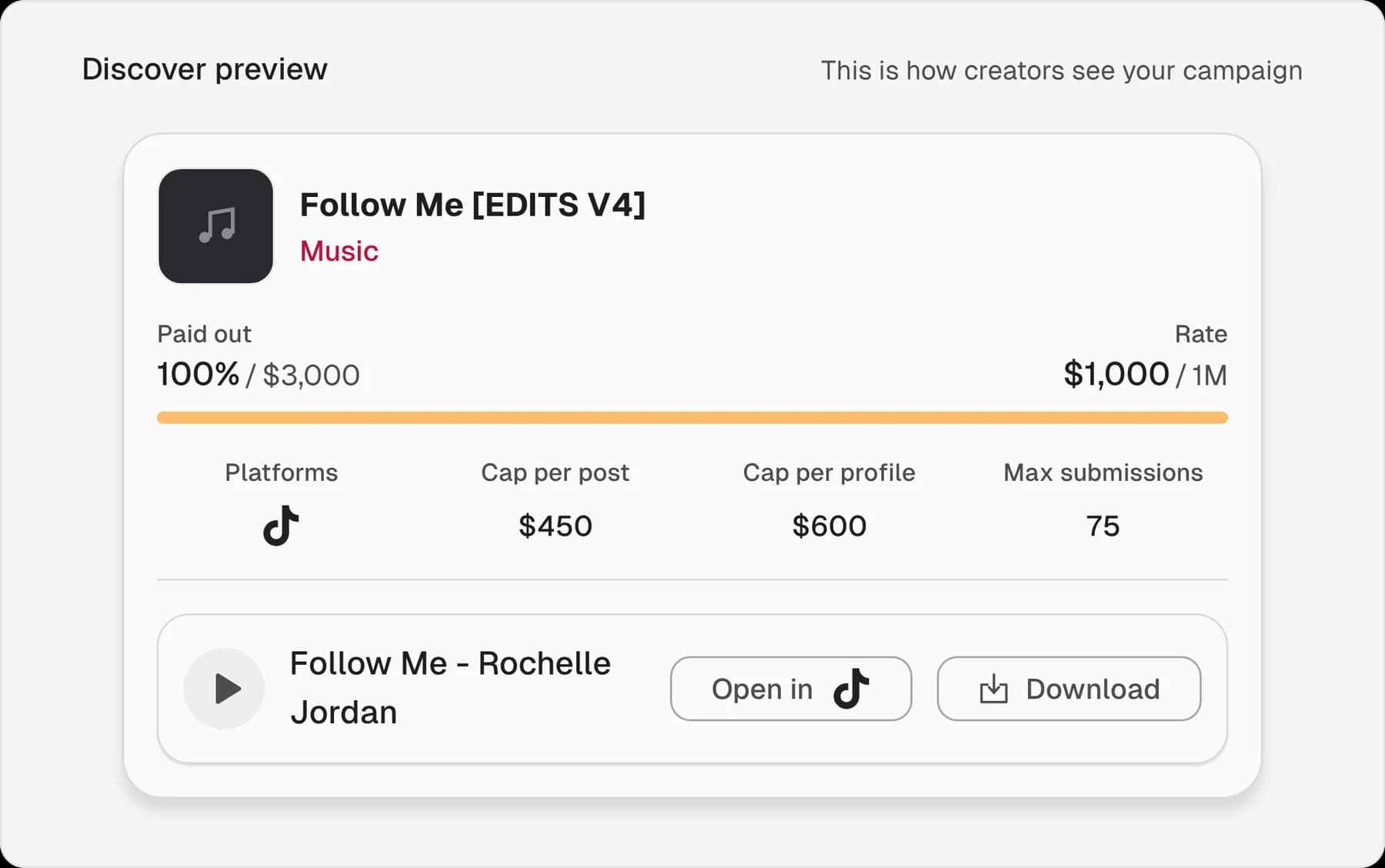
Platforms like Clipster run these campaigns. You set a budget and a rate per 1,000 views, add your song, and write a short brief. Creators on the platform then post videos with your song on TikTok, Instagram Reels or YouTube Shorts. Good platforms check every post for fake views, so you only pay for verified views, and show views, sound usage and streams in one place.
A good brief is specific. It should:
- show 3 example videos for creators to copy
- name clear niches, like movie and TV edits, anime or IRL clips
- say which part of the song to use
- require using the original sound and commenting the song name
- list clear do's and don'ts, like lyrics on screen or a minimum number of views a post needs to earn
What it costs
Creator campaigns are usually measured by CPM, the cost per 1,000 views. With a pay-per-view campaign, you pick the rate, so you know your maximum cost before you start.
Because some videos go viral and earn far more views than they're paid for, the effective cost can end up much lower than the rate you set.
6. Track what's working
Views are a good start, but they're not the goal. To see if TikTok is really growing your song, track:
- Sound usage: how many videos use your sound. You can see this on the TikTok sound page.
- Saves and shares: signs that people want to come back to the song or send it to friends.
- Streams: daily streams on Spotify and other services, before and after you start promoting.
- Followers: on TikTok and on your streaming profiles.
TikTok for Artists shows how your songs are doing on TikTok, and Spotify for Artists shows your daily streams. Check both before and after you post or run a campaign to see what made a difference.
Common mistakes to avoid
Most songs that don't take off on TikTok run into the same few problems. Here's what to watch out for:
- Promoting the whole song. Pick one snippet and push it. A strong 20 seconds beats a full track nobody uses.
- Posting once and giving up. Most songs need weeks of steady posting and testing.
- Chasing views, not conversions. A viral video where the music is just background noise won’t transfer to streams.
- Buying fake engagement. Bots don't stream songs or tell friends, and fake views can hurt your account. Only pay for real, verified views.
- Not tracking streams. Without before and after numbers, you won't know what worked.
How to promote your music on TikTok with Clipster
Clipster is a platform that runs pay-per-view creator campaigns for music.
Here's how it works:
- Set your budget and rate. Choose how much to spend and how much you pay per 1,000 views.
- Add your song and we’ll create the brief. After running over 3,200 campaigns, we know what works, so we’ll plan the strategy and brief for you.
- Creators post. Creators make videos with your song on TikTok, Instagram Reels and YouTube Shorts.
- Track the results. Every post is checked for fake views, so you only pay for verified views, and you can see views, sound usage and streams in one place.
Example: from 7K to 340K+ daily streams
"Follow Me" by Rochelle Jordan came out in 2013. In 2026, it got a second life on TikTok through a series of edits campaigns on Clipster. The first round's brief asked for high-quality movie, TV and anime edits, part of the lyrics on screen, and a comment with the song name.
'Follow Me' is about having standards in a partner, which is a culturally relevant conversation today. It was easy to make edits for: a scene of a famous character who's the perfect partner, like Jim from The Office. The theme was clear, the song carried the edit, and the brief kept it simple.
Konstantin S.Music Partnerships Lead, ClipsterIn the first round alone, 502 creator accounts made 869 posts, which reached 14.9M verified views.
The effect showed up on Spotify. On launch day, the song had about 7,300 daily streams. By November 10, it had 341,000, about 47 times more, and videos using the sound on TikTok grew from 7,300 to 613,000.
The cost per view also ended up well below the rate. In one round, a $3,000 budget at $1.00 per 1,000 views delivered 14.2M verified views, an effective $0.21 per 1,000 views.
Across 17 rounds, the campaign series has reached 236M+ views, at an effective $0.25 per 1,000 views. And it isn't a one-off: King Von's "Took Her to the O" rode a developing trend with back-to-back campaigns, and its daily streams rose from 800K to 2.5M.
You can see more case studies on Clipster's music page.
FAQs
How much does it cost to promote a song on TikTok?
You can promote a song for free by posting on your own account. Paid options vary. Influencers usually charge a set fee per video, whether it performs or not, while pay-per-view creator campaigns let you set your own rate and budget. Because some videos go viral, the effective cost can end up well below that rate.
Can I pay creators to use my song on TikTok?
Yes. You can contact creators directly, pay influencers per post, or run a creator campaign where many creators post with your song and you pay for the views they get.
How long does it take for a song to take off on TikTok?
It varies. Some songs catch on within days, while others take weeks of testing snippets and posting. Creator campaigns can speed this up, because many videos with your song go live at once.
Do I need a lot of followers to promote music on TikTok?
No. TikTok shows videos to people based on what they're likely to enjoy, not only to your followers. Creator campaigns also put your song in front of the creators' audiences, so your own follower count matters less.
How often should I post to promote a song on TikTok?
A few times a week is a good target while you're promoting a song. Posting steadily for several weeks matters more than posting a lot in one day, and it gives you time to test different snippets and ideas.
Can I put my music on TikTok without a distributor?
Yes. TikTok's SoundOn lets you upload your music directly, and it can also send your song to other streaming services. Most artists still use a distributor because it handles all platforms at once.
Final thoughts
A good TikTok promotional strategy for music comes down to making your song easy to use, then getting as many people as possible to use it. Start with your own videos, find the snippet that works, and when you're ready to scale, bring in creators.
Want thousands of creators posting your song, and to only pay for verified views? Launch a campaign on Clipster.
Turan is the founder and CEO of Clipster, the platform where brands, artists and apps pay creators for every verified view. Before that, he grew gaming channels to millions of followers and ran a TikTok agency for music labels.